
Read Time: 7-8 minutes
‘A line is a dot that went for a walk’
Paul Klee
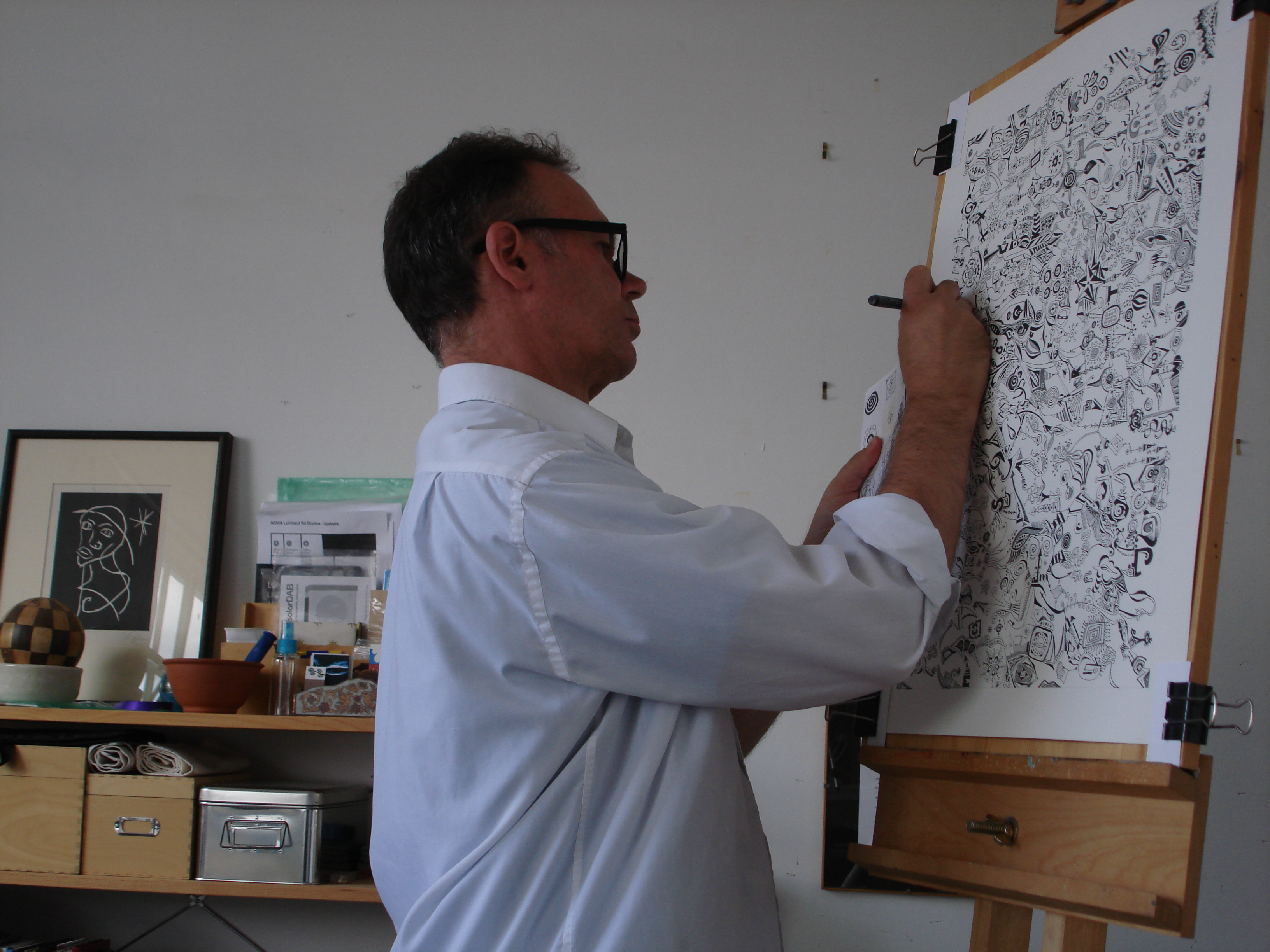
My work at the moment is focussed on drawing. I love the precision you can achieve with a graphite pencil or pen and ink. Drawing can be a meditation. I often work in silence – completely absorbed. I am a Yoga teacher, and I am aware of the connections between the creative process and what I do on the mat. Drawing can also be very physical – holding still, perhaps stretched at an unusual angle; firm, but relaxed (‘sthira sukham’ in Yoga). Control.
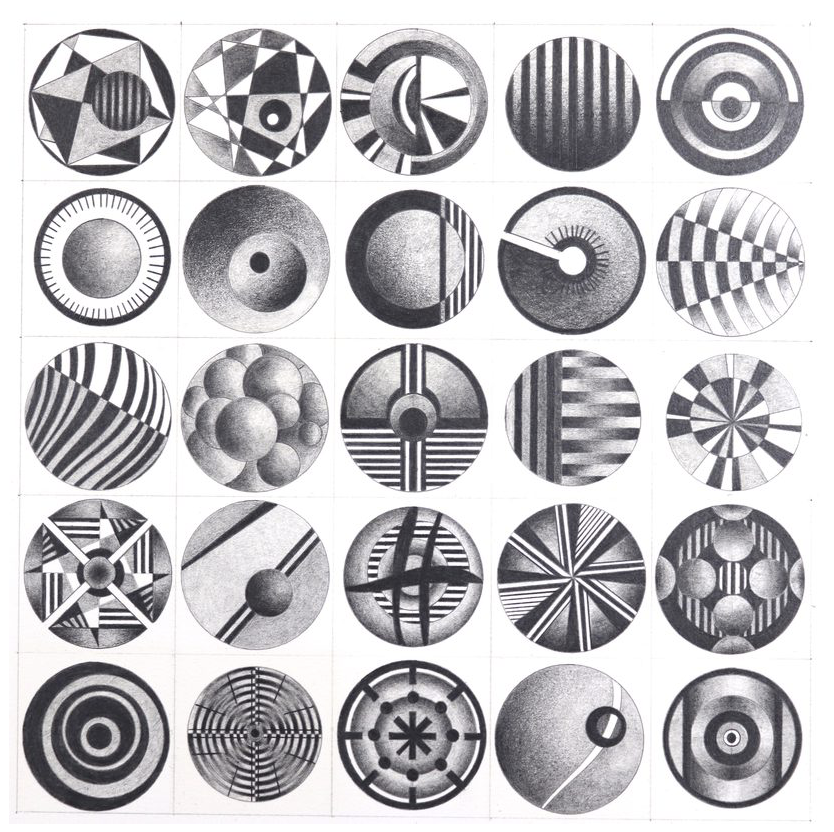
I like the technical aspects of printmaking – the care and precision, the unpredictability and the magic of the extraneous and unexpected marks.
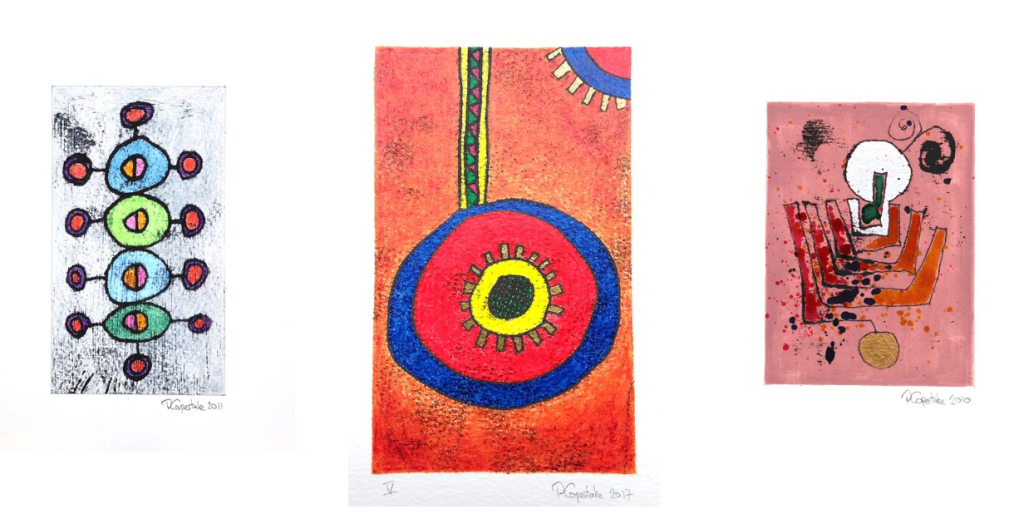
Every piece is unique, despite having a common ‘source’. I have worked with lino, collagraph, etching and drypoint, and also delight in simpler techniques like mono-printing – beloved of artist Paul Klee. There are overlaps with the more conventional drawing that I do. I love colour, so using inks, paint, or crayons in an exploratory journey on paper is a joy. I mash up techniques and hand-colour or draw on prints I have done.

At University, I specialised in molecular biology and biochemistry in Edinburgh – and I still have my early ‘dissection drawings’ of the internal organs of rats, earthworms, frogs, miniature hydra and amoeba. I loved the shapes and structures (and names!) of cell organelles – mitochondria, ribosomes, endoplasmic reticulum, the Golgi apparatus, and the ‘3-D’ diagrams illustrating the shapes of protein folding in biochemistry. No surprise then, perhaps, the appeal of favourite artists such as Joan Miró and Paul Klee.
Living in Edinburgh fuelled my passion for the visual arts. I felt a bit of an outsider amongst my scientific peers and would spend my spare time visiting galleries in the city. I loved the Scottish National Gallery of Modern Art. I can spend quite some time on a single drawing or painting, trying to see (as up close as possible) how it has been constructed. My early passion for art is the result of seeing the work of the 20th Century ‘greats’ – Paul Klee, Joan Miró, Henri Matisse, Marc Chagall, Wassily Kandinsky, and Pablo Picasso.
I moved to South Yorkshire and established a small studio at the beginning of 2019, not long before the world then went into ‘lockdown’. I enjoy figurative work, and now regularly attend a life drawing session in Sheffield, where I live. I love the line and shapes of the models – and the line drawings of Matisse, Picasso, Egon Schiele, David Hockney, Lucian Freud, and Alberto Giacometti are particular favorites. I love the emotional intensity and draughtsmanship of Tracey Emin’s work, and am lucky enough to own one of her etchings. Her generosity and philanthropy is inspiring. Her Foundation in Margate to transform the town into an artist’s haven is beautiful. What a legacy.

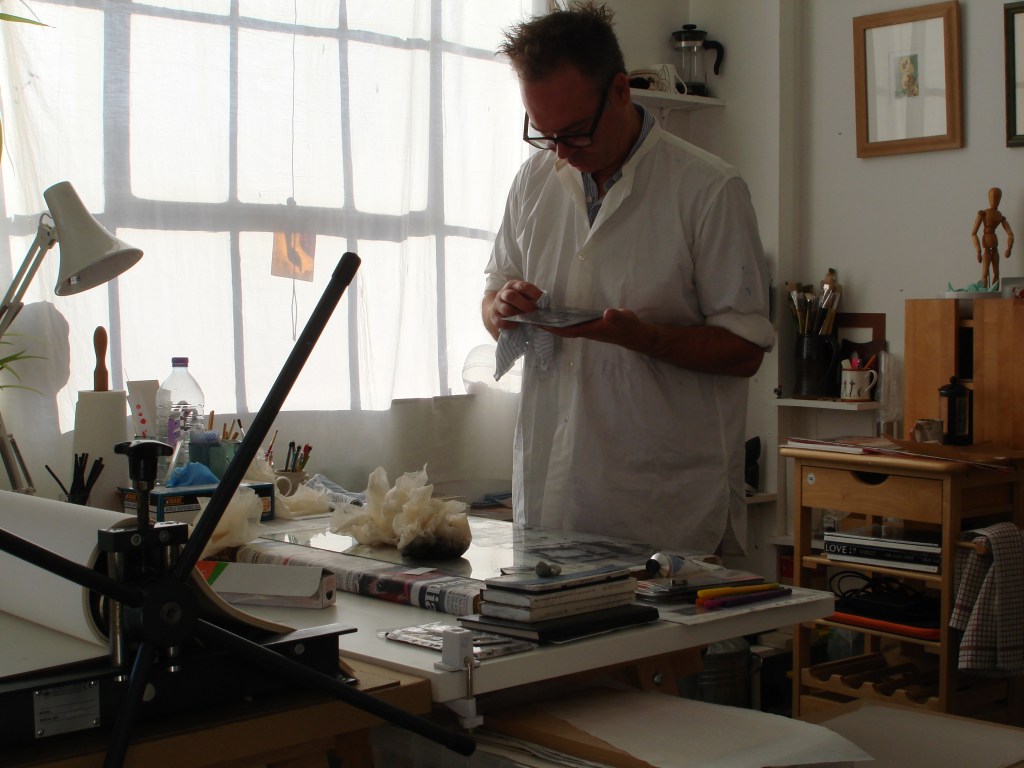
Life drawing really gave me the confidence to take my artistic practice seriously. I lived in London for over thirty years and regularly attended sessions by the wonderfully creative group London Drawing, run by artist Anne Noble-Partridge. I attended a summer school with them in collaboration with Central Saint Martins as a way to ‘test’ my confidence and desire to pursue art. I loved it, and found myself a studio in South Wimbledon near to where I lived. It was a fantastic privilege to be able to work in my own dedicated studio, within a community of other artists.
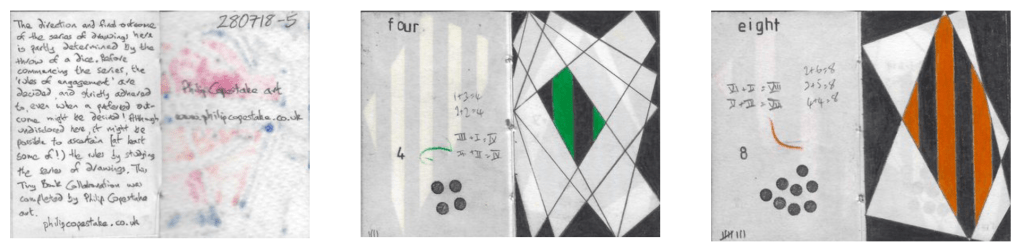
The inspiration for my Tiny Book came from a series of drawings I started several years ago, the construction and outcome of each being partly determined by the throw of a dice. After deciding on a basic ‘structure’ and set of rules, the dice would determine the direction of the line – ‘a dot going for a walk’. The book consequently evolved in an unpredictable way. Sometimes the dice would frustrate me, other times it would delight me, with the result. There is temptation to ignore a result and throw again. But always I go by the dice! There is an element of surprise – it’s all down to chance.
I was in quite a difficult period of my life when I decided to have a go at my Tiny Book. I had spotted Hope’s plans on Instagram and it instantly grabbed my attention. Working on my Tiny Book was a satisfying focus. Absorbing and therapeutic. I enjoyed seeing how the pages unfolded, and the ritual of seeing where the dice-throw took me. It became a Book of Numbers. One to Twelve. Each page unique. Resolved and contained.
I like a Project and a Process, and often have several on the go at any one time. I have a list of ideas to start, and an even longer one of projects to finish. I have unfinished drawings that I started 6 or 7 years ago. Ideas come spontaneously, sparked by things I see around me. Day-to-day observations kindle ideas. My biggest frustration is that there aren’t enough hours in the day, or days in the week, to spend in the studio.
Phil is currently working on his second Tiny Book – ‘Variations on a Theme’.
You can follow progress (on this and other projects) on Instagram: @philipcopestakedrawing
For other work, visit:
@philipcopestsakeart, @philipcopestakeprints, @philipcopestakelifeart, @philipcopestake
And for the delights of Phil’s little Yorkshire garden @asmallyorkshiregarden
Text: Philip Copestake ed. Hope Fitzgerald Images: Philip Copestake & Hope Fitzgerald