

Hazel McIntosh at work
Read Time: 7 minutes
Artists Illustrator Hazel McIntosh on the magic of drawing and the challenge of doing it well
Hope Fitzgerald: Tell me about drawing. It’s clear that it’s your passion.
Hazel McIntosh: Drawing’s something I never want to stop doing. Being able to draw is a big part of my identity. On the graphic design course at Saint Martins, you had to draw very quickly. You couldn’t spend ages on something because things were always moving and changing. I had a great tutor there who organised a week of drawing for me at the Morning Star. It was the only newspaper that would let me in the building! The man in the drawing is the type setter, back when they had the clunky old machine. I thought that machine is big and black – I’ve just got to get out my big black. What you’re seeing in front of you often dictates what you draw with.
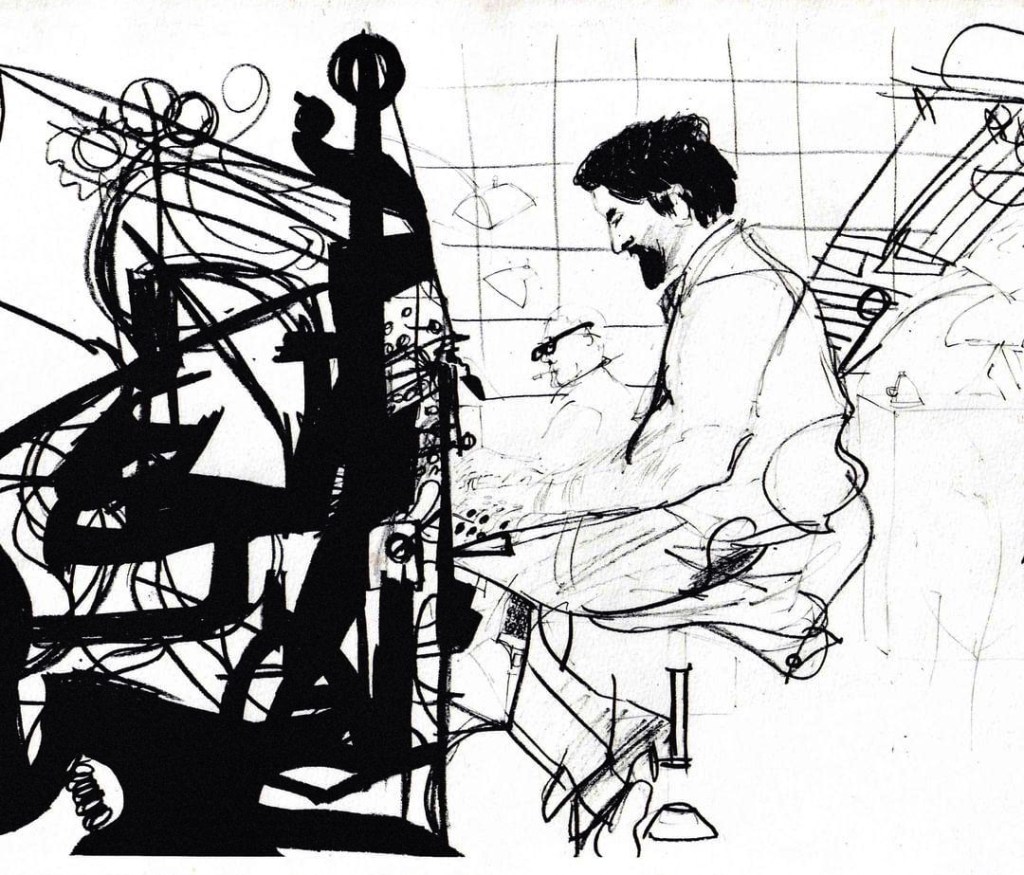
I’m not interested in doing realistic drawings. If I’m drawing a model, I look for certain lines or the colour of something they’re wearing might really inspire me. I’m always interpreting what’s in front of me and what I enjoy about what’s in front of me. What motivates me is the energy, the essence of the pose, the plant, the place. Sometimes it works, sometimes it doesn’t. I tend to work quickly as well. I’m not somebody who spends days on an artwork. I’m not interested in that at all.
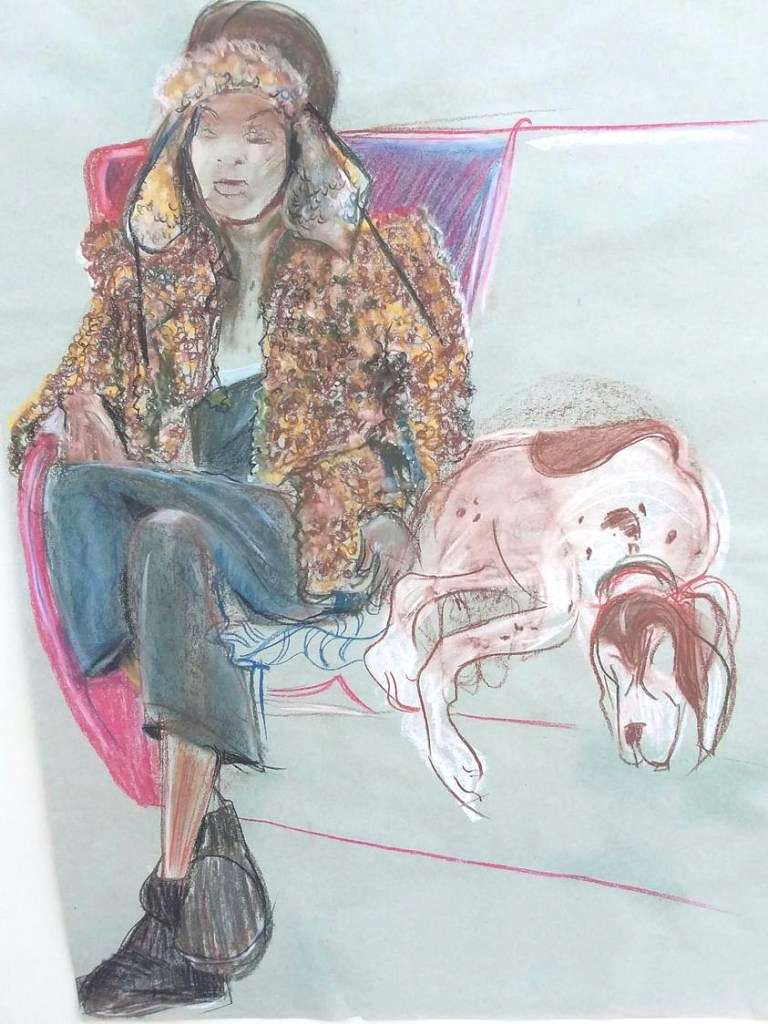
I love reading and I love words, so illustrations seemed a natural thing for me. I’ve always done print making – it’s been really exciting going back to print making since coming to Faversham.
I always use original drawings for screen printing and Riso because I like to draw from observation. I’ve been drawing at Edible Culture for over a year. I did a Riso workshop at Goose Studio in Faversham where we made a zine with 12 pages; it was logical to do a page a month because I had a drawing per month.

HF: How did teaching and freelance illustration work with family life for you?
HM: I lived in Singapore for a while, and when I came back to the UK, I was a single mum for quite a long time. I was doing freelance work and bringing up my son. Obviously, my son was my priority. I kept my personal drawing going, and I did a lot of teaching, just to earn enough money to support us. I’ve always taught throughout my working life. I stopped teaching when most of the work became digital. I’m still not very interested in computers. I love the raw materials of drawing too much.
New Society
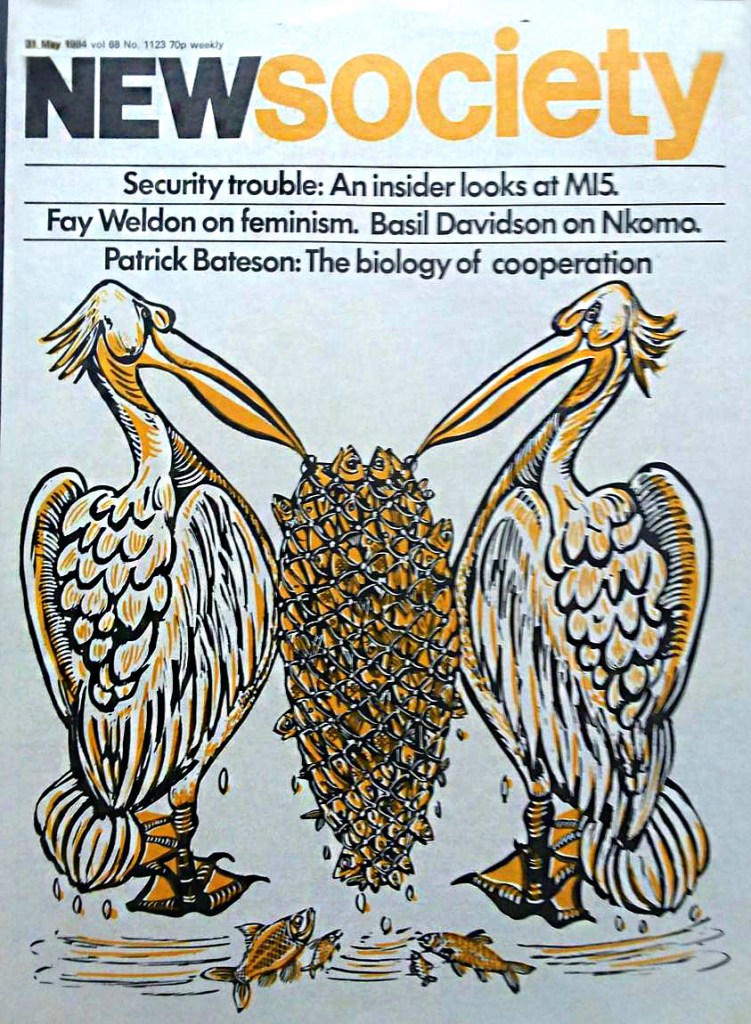
“I really enjoyed working for New Society. I drew the cover illustration for Patrick Bateson’s article ‘The Biology of Cooperation’. I had to read the article and interpret it. Sometimes an image would just kind of pop up in your mind. The subject matter for the pelicans was cooperation. Within the text, he talked about how pelicans help each other fish together. Obviously, they don’t fish with the net, but that was the image I saw. In those days, you could only do 2 colour printing – a bit like Riso. it’s really exciting when you see your printed work in London on the newspaper stands. Then the next week, you’re doing something else. It’s not terribly precious in that way.”
HF: How would you describe your style of teaching?
HM: I’ve always been enthusiastic about teaching drawing, especially with graphic illustration students. Whether it was life drawing classes or sketching outdoors, my main method of teaching was to encourage students to find their unique drawing style, explore their interests, and experiment with materials. I just love drawing. And that was my main thrust, I think. Teaching illustration at Loughborough was thrilling; the students were talented and had different ideas. It’s an exciting two-way process. Wherever I taught, in the Far East or here, I think what students took from me was my love and enthusiasm for drawing.
Drawing is genuinely one of the most challenging things to do well. The reason I love it so much is that you’re constantly learning. You dive into this world, whether it’s drawing a person, an object, or a plant, and you get completely involved in it. It’s magical and wonderful.
So, if I were encouraging someone to draw, I’d tell them to start with something that means something to them, something they really like. Keep it simple. Just grab a few materials to draw with and really look at it. Try to feel it, feel the movement, feel the shape. I never get into teaching people the nitty-gritty of drawing or lecturing about shading or perspective. It’s all about how you feel about what you’re drawing.
You’ve got to love it, really want to do it. It’s like anything in life; you’ve got to be passionate about it. Sit quietly, look around, and be sensitive to the materials you’re using. I’d always encourage drawing from something. I often have a sketchbook in my bag. I prefer an A6 or A5 sketchbook, pretty small.
From Sketch to Print
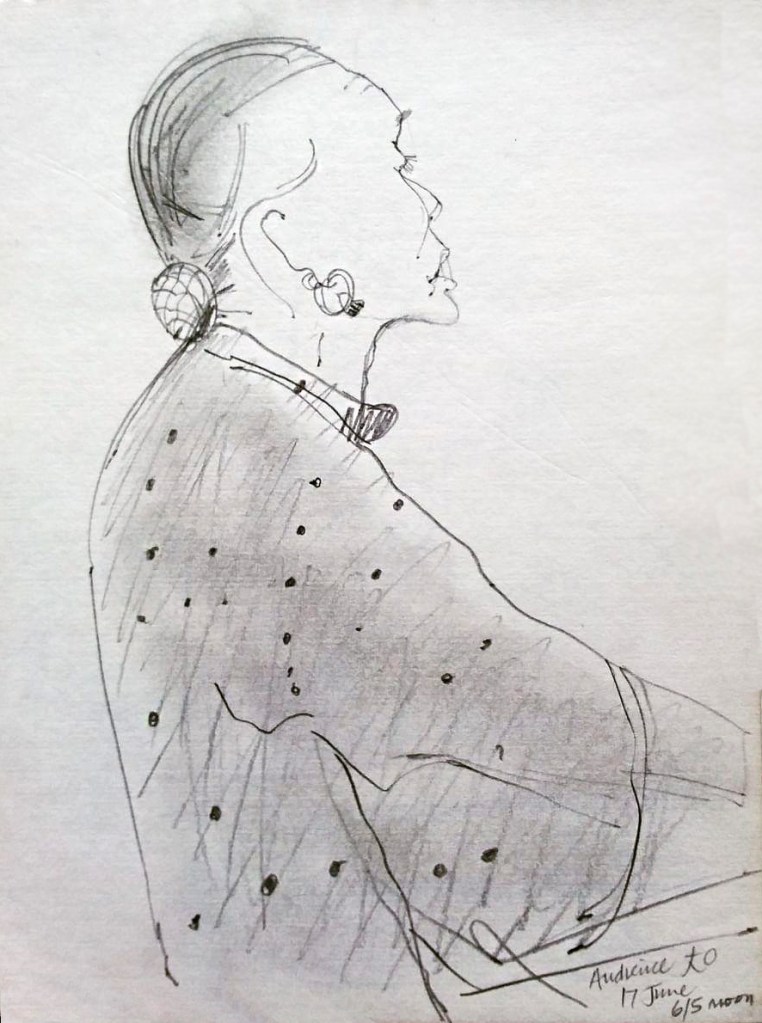
“I did a live sketchbook drawing of Miriam Margulies at Saint Pancras at a reading, it was to celebrate Alice in Wonderland. The screen print based on the sketchbook drawing was made at the Print Block.”

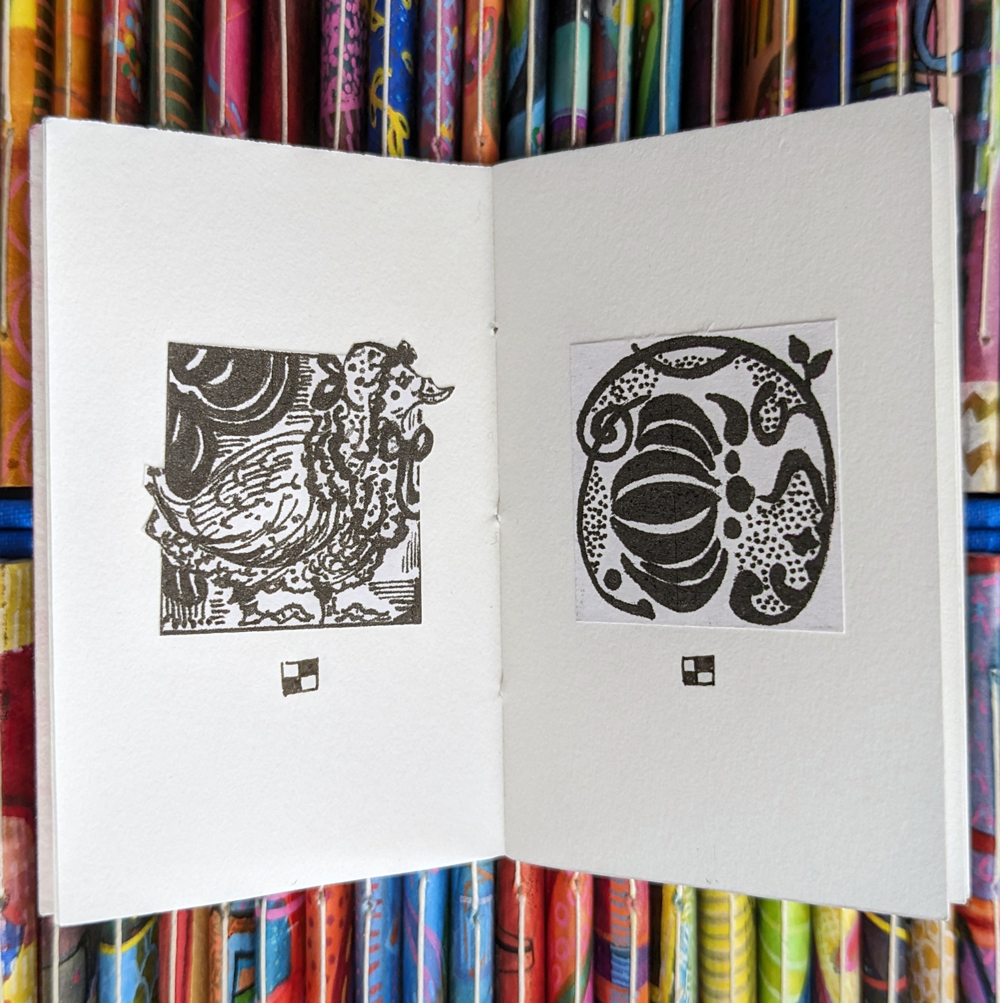
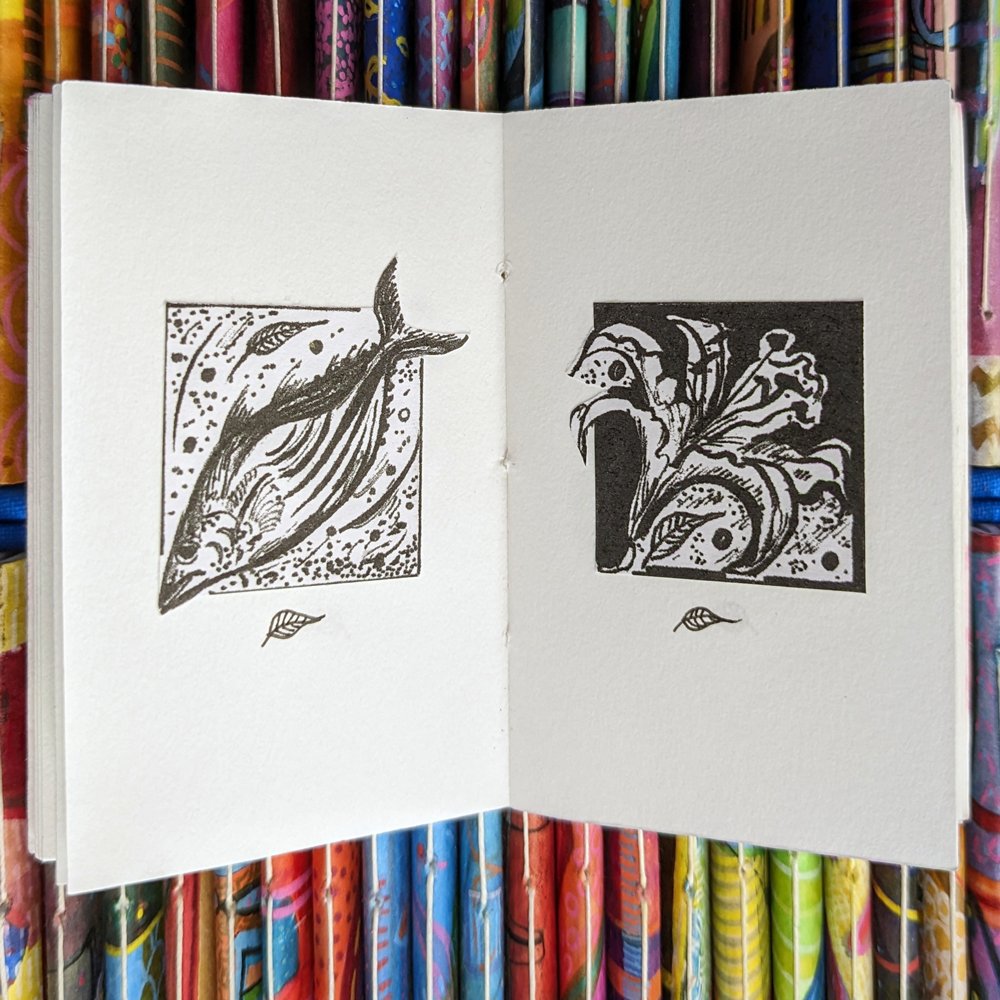
HF: Tell me about the one inch drawings you included in your Tiny Book.
HM: The idea was inspired by an exhibition of the illustrator John Vernon Lord at the Quentin Blake Centre for Illustration. His work is amazing. It’s mostly black and white and the pen work is just fantastic. He’d been challenged by his grandson to do a drawing a day for a year. The House of Illustration invited people to do a one inch drawing for one month and post it online, so I took part in that. I used some of these tiny images in your Tiny Book Collaboration as they seemed to be the perfect fit.

Where to find Hazel McIntosh:
Instagram: @hazel_mcintosh